
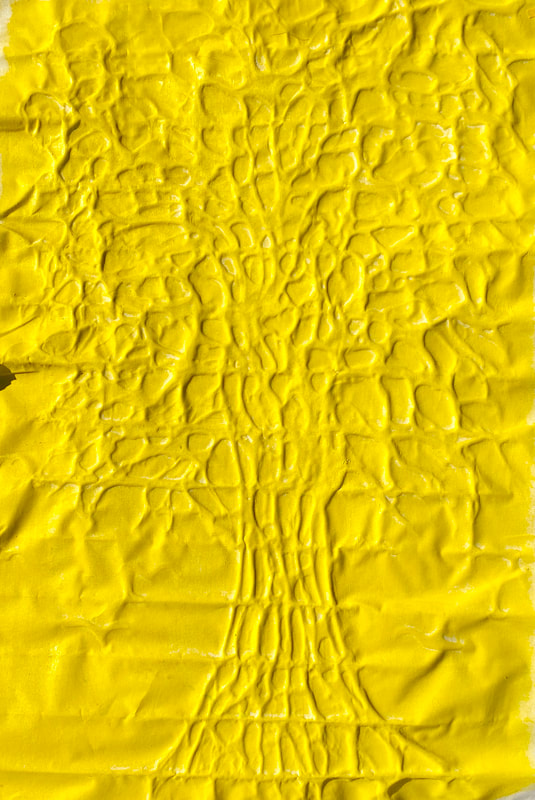
 Sunny Tree – 1 of a SeriesThe Sunny Tree is one of 10 paintings of trees made using a similar format of Glue and Oil Paint.
The yellow color is bright and happy, the tree symbolizes the different branches of one’s life. In today’s crazy world of social distancing, darkness, solemnness, one has the time to think about their life, where they have been, where they are going.
0 Comments
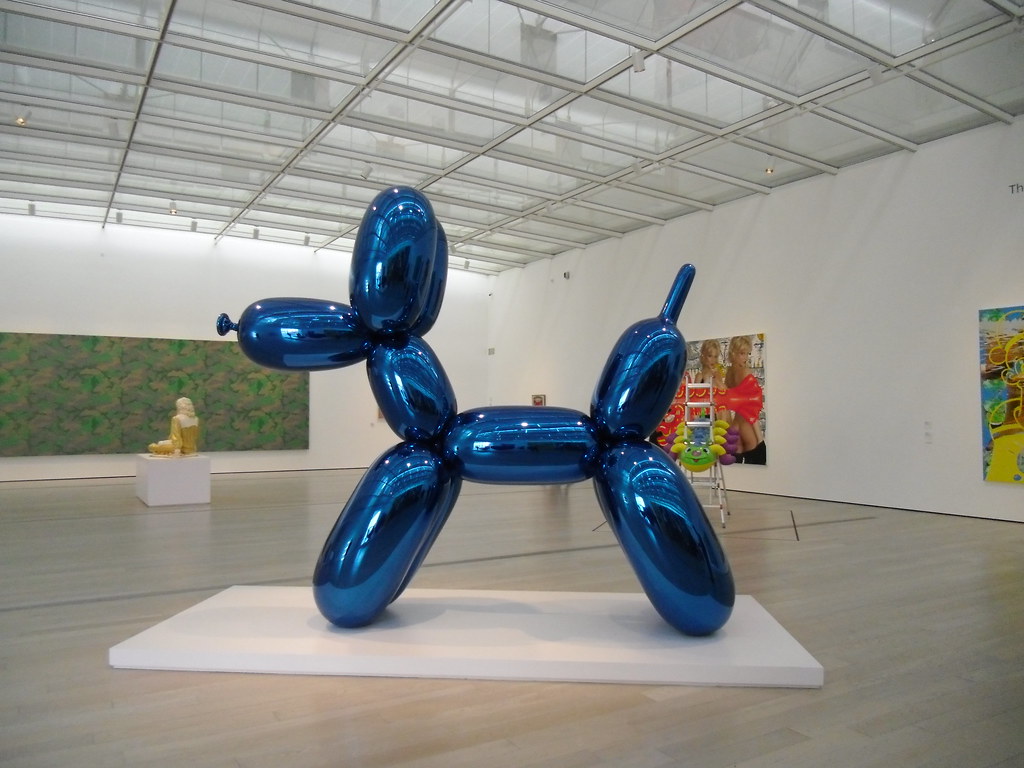 Jeff Koons is an American artist well known for his pop art sculptures. His balloon dog is a 10 foot sculpture as are many of his sculptures. They are big and out of proportion. He’s one of my favorite artists; the colorful sculptures always bring a smile to my face. They shine, they are clean and get close enough and you will see your image in the mirrored surfaces. As one of the world’s most expensive art works, Koon’s art has many critics. The balloon dog was even described as ‘baloney’ by critics. Still, the sculpture sold for $58 million in in 2013 (i recall). 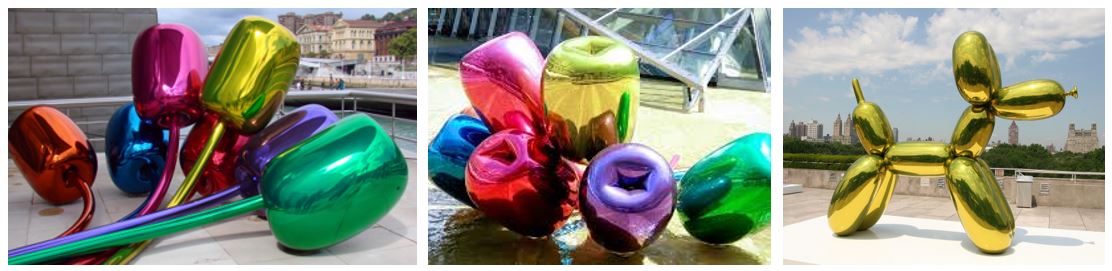 Jeff Koons Scultptures 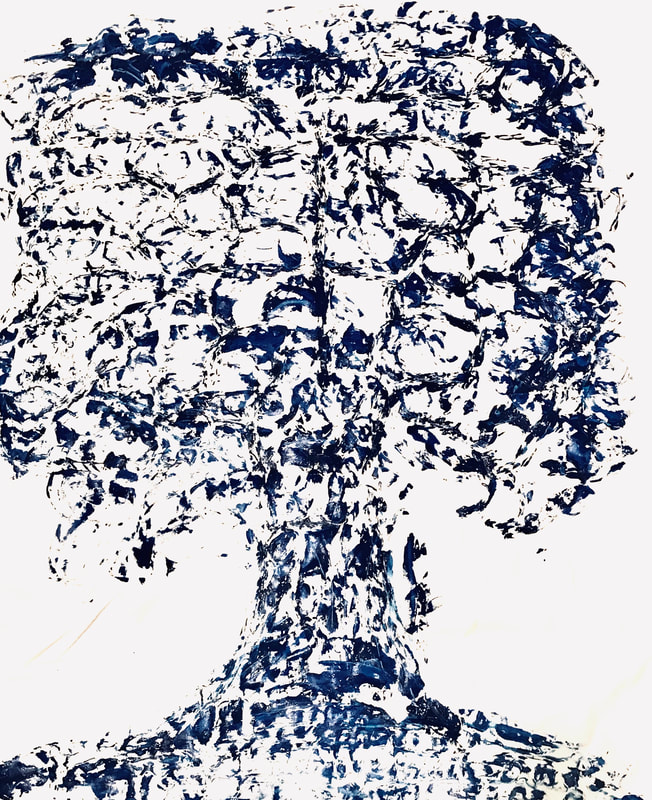 A new painting in Blue and White. Branches symbolize the complexity of one’s life. Yet, all the branches come together and connect with the main branch, which continues to the ground. Most of us live our daily lives and our minds are able to analyze our current situation. This painting shows us that our daily lives are rooted in our past, present and future – directly into the ground
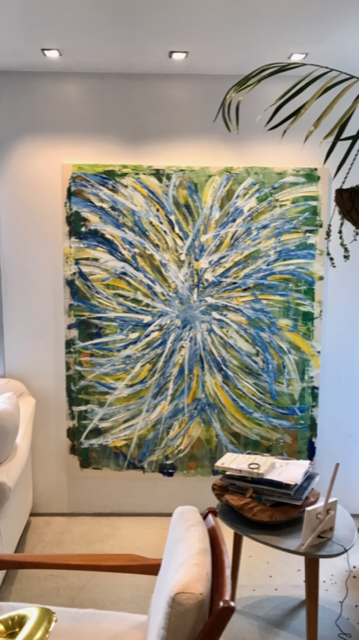 Having been an art lover my whole adult life, I started painting a few years ago. With no formal education and only self training and lots of YouTube instructional videos I’m happy to post some of my creations 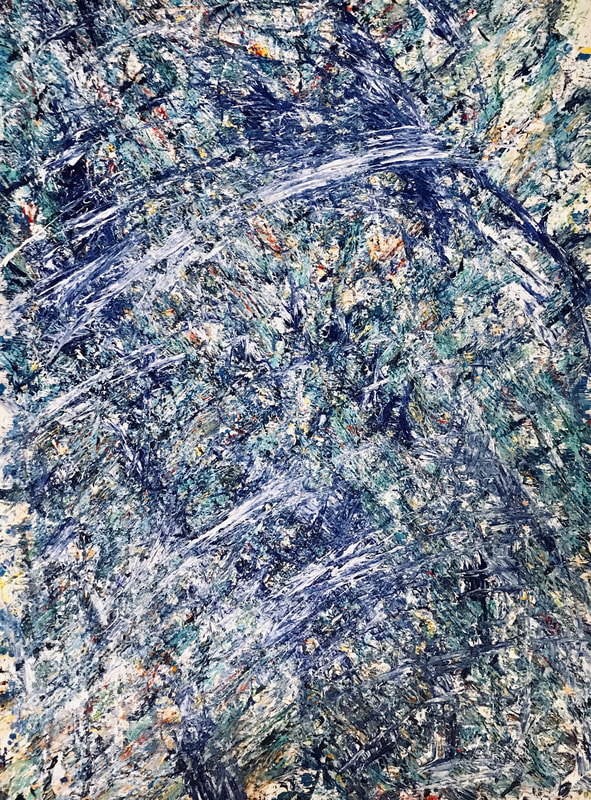 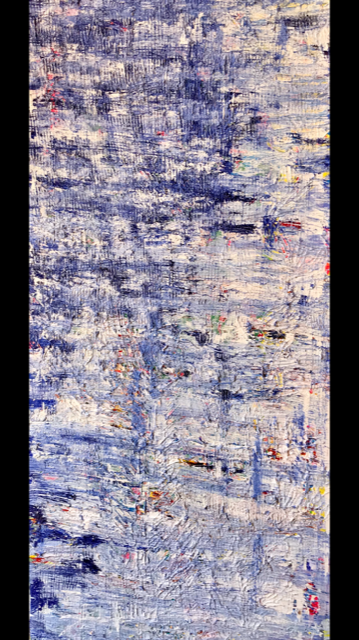 The Blues
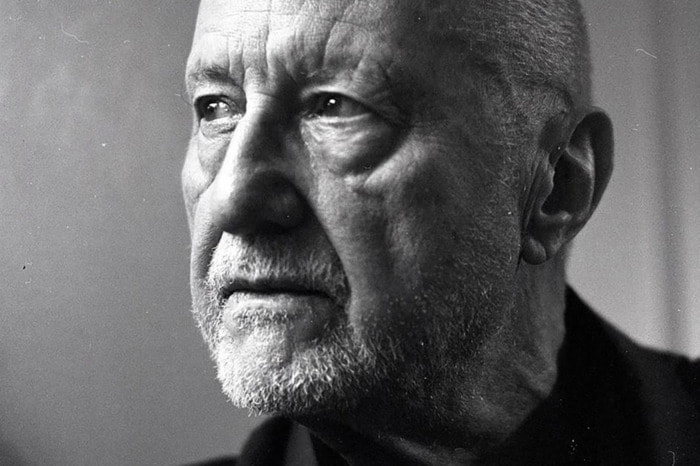 A Short Memoir in 70 Chapters Each one of the 70 short chapters of Frederic Tuten’s “My Young Life” showcases a moment of awareness he experienced along his path to becoming a writer. The first chapter features Tuten as a young man plagued by ill health, which nudged him towards books. From Treasure Island by Robert Louis Stevenson to Tom Sawyer by Mark Twain, Tuten survived a year of rheumatic fever by escaping into the adventures of fictional characters. After recovering, he returned to school as the tallest person in the class and as one of the few children who did not have any friends. 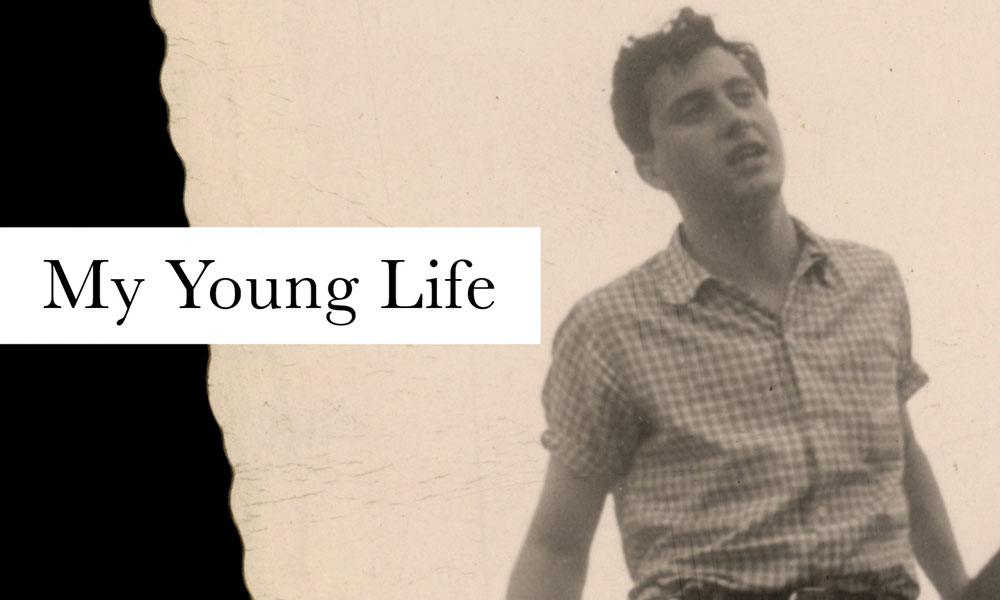 Impeccable Vernacular
The memoir evolves to illuminate Tuten’s hopes and dreams as a high school student with romantic notions of moving to Paris and becoming a renowned artist. It shifts as he becomes increasingly angry and self-involved, eventually dropping out of school. The storyline highlights Tuten’s remarkable writing ability as it progresses. He transports readers back in time with immaculate prose. Tuten paints a tale decorated by delicate contrasts, like the curt masculinity loosely depicted in his father’s love for all things pork—sausages, pig knuckles, pork chops, and hominy grits—along with his mother’s ability to obtain such things in the Jewish neighborhood she chose to move to in order to give her son a better education. “Friends” and FootnotesFrederic Tuten moves effortlessly between timelines, just as he does in his fictional work. He cleverly introduces a fantastic array of characters including John Resko, an ex-con who transformed himself into a celebrated artist, and the writer of God’s Angry Man, Leonard Ehrlich. They are tersely presented and then expanded on in footnotes where he reminisces about the person and often blames himself for not keeping in touch. Tuten effectively uses such footnotes throughout the memoir, giving the reader a wide-angle view of the narrative. No Time for Nostalgia The tale unfolds to reveal Tuten’s nonchalance about moving from one neighborhood to the next, never getting nostalgic. His mother’s opinion about how he got steady employment at the post office instead of going to college is briefly revealed as he moves forward to the next chapter. Tuten does not dwell on what could have been and instead forges ahead, taking the reader to the next relevant experience with brilliant and poignant writing. The result is an exceptional portrait of the writer at various stages of his young life.  A Variety of Interesting Happenings in the World of ArtNo thanks Saudi Arabia, is what the country is being told by the art world. Ever since Saudi dissident and Washington Post journalist Jamal Khashoggi was assassinated, the main stakeholder of the Frieze Art Fair gave Saudi Arabia back its investment of $400 million. Art Bringing Climate Change to LightAn installation in Scotland by Finnish artists Timo Aho and Pekka Niityvirta highlighted climate change literally by using LED lights and sensors to show where water will rise to if the issue is not addressed. The installation is called “Lines” and was done for the Taigh Chearsabhagh Museum and Arts Centre. Museums Are Under ThreatAccording to former Walker Art Centre Director Olga Viso, museums will have to undergo structural change if they are to survive. Old institutions are faced with the challenge of younger members demanding inclusivity as donors fight to protect the status quo. Demonstration at Andy Warhol Show IgnoredSage-burning protestors at the Andy Warhol exhibition at the Whitney were not featured in reviews of the show. The outrage at the event was staged in protest of Warren Kanders, who is the vice chairman of the board of the Whitney, but also the owner of Safariland, a tear-gas manufacturing company. Getty Images Photo Sparks Legal ThreatsA man wrote to a tech publication alleging that they featured a photo of him in an article about the “hipster effect,” a phenomenon in which people who are opposed to mainstream culture end up looking alike. Despite threats of legal action, it turned out that it was a stock photo of a bearded man wearing a flannel shirt and not actually a photo of the fuming man who accused the publication of lacking “basic journalistic ethics.”
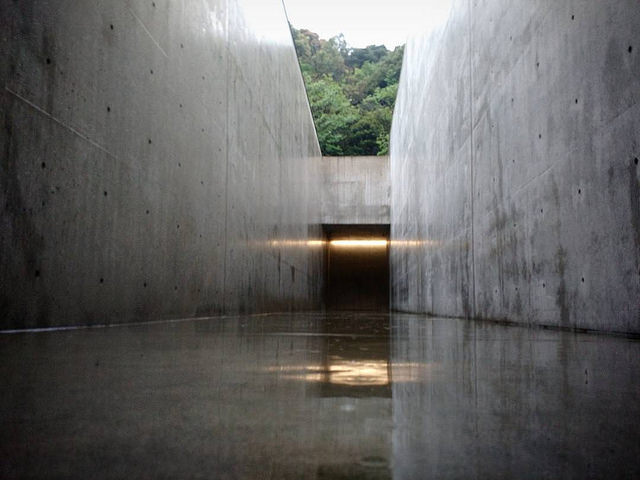 In Honour of Contemporary Japanese ArtOf all the excursions I took over the past year to explore art around the world, visiting the Lee Ufan Museum in Japan was one of the most remarkable. Lee Ufan is minimalist from Korea known for his significant influence on the evolution of contemporary art in Japan. The museum was launched in Ufan’s honour in 2010. Delving Deeply Into Canvas, Steel and StoneWhen Ufan paints, it is more than a graphical representation of a mental process – he doesn’t just make art based on what he is thinking about. The process Ufan takes involves opening a dialogue with surrounding objects and embracing the influence of elements such as time and air. The artist uses his physical form and breath to establish a rhythm of creation as a unique form of conversation. With each deftly executed brushstroke Ufan exudes an inner calm which is also translated into his work. Besides painting, Ufan also creates minimalist constructions in line with the paradigm of the Mono-ha (School of Things), a group he was a prominent member of during the 1960s. Assemblies are fashioned using natural materials such as rock, slate and steel. The aim is to utilize the understated power of vacant space as it amalgamates with physical elements – and so Ufan trims the act of making art to its most raw state. His process even extends to the area in which the work is installed. Before each installation Ufan walks around the space, studying it from all angles, before deciding where the art should be placed. For Ufan the complete progression, from the process of creation through to the space it ultimately occupies is vital to its success. 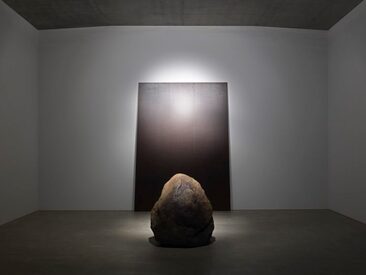 “An artist is a child of the times”According to Ufan, the way that art is created and perceived changes as society do over time. People are driven by similar values and ideologies during periods in time. This makes it easier for artists to make an impact and harness an emotional response with their work. Because the world has become increasingly connected in recent times, society has evolved into being more diverse and fluid. We are subjected to more opinions, cultural input, and raw information than in any other era. Values are rapidly shifting and art is taking off in a staggering array of new directions. Ufan believes that art tackles current events and social issues that are unfurling as time unfolds. Many artists in the contemporary art realm are creating with no idea how their art may evolve until they are done with it. It is no longer an option for these artists to construct works about topics that are known by the masses and generally understood – this simply won’t make a deep enough impact. In this era, people are captivated by the unknown. Artists need to draw on the unconscious, contradictions, chaos and even madness to increase the allure of their works. Viewers need to be provoked into experiencing new emotions and concepts. Ufan states that “works that are logically organized, that can be clearly explained, and that is destined for a predictable goal are not art.” Does True Art Lie in a Powerful State of Uncertainty?When the museum first opened its doors, Ufan expressed a desire that the space would become “a place that is alive”. The artist believes that a work of art is always in the process of being completed and is therefore eternally transforming as it is influenced by the viewer’s frame of mind and the environment it is located in. As the work is initially ‘completed’ it seems as though this is how the piece is and will be – in an inactive state. In reality, art continues to transform even after the artist’s work is done. It then starts to live in a different way. Steel rusts, material deteriorates, plants around the work grow or die and the light around the piece changes. Viewers return to see the work in a different mood. This means that ultimately, artists lack control over their work.
It is in this state of uncertainty in which an artwork and the space it occupies, the artist and the viewers meet. It is a space where the power and beauty of art can be experienced and perhaps also what makes the Lee Ufan Museum so magical. The space is home to a powerful permanent collection that is constantly transforming and is beautifully alive.  The Arts Are Vital to Us All – Show Your Support!
In so many countries around the world, art is highly undervalued. When governments have to make budget cuts, it’s usually one of the first areas to suffer. Unfortunately, not everyone is aware of the massive potential the arts have to improve society. Here are some of the many reasons why art is important to everybody in every country and should be supported: 1. It strengthens the economy – Arts and culture play a major role in tourism. It is also the driving force behind millions of sustainable jobs. 2. Art unifies communities – The arts can bring people together regardless of differences like race, gender or age. It can also help people from different cultures to develop a better understanding of one another. 3. Improved wellbeing – It feels good to get creative or to enjoy somebody else’s creativity. Studies have proven that art is uplifting and can create positive experiences. 4. The potential for improved healthcare – The healing benefits of art are becoming known and acknowledged by more and more healthcare professionals. Arts programs are being implemented for patients and staff members and have been met with great success. 5. Improved academic performance – Research has revealed that students engaged in a balanced education that includes the arts are more likely to achieve higher academic results. 6. Improved positive connection – The arts provide entertainment as well as opportunities for connection at art exhibitions, musical performances, drama clubs and other artistic destinations where people can share the joy of creative experiences. 7. Massive positive social impact – According to research, areas with a high level of engagement in the arts have improved civic engagement, superior social cohesion and lower rates of poverty. 8. Improved mental health – Art therapy is fast becoming mainstream. This includes drama therapy which has proven to be effective in treating emotional ailments like PTSD and insomnia. 9. Innovation and creativity – Both innovation and creativity are highly sought after traits in the corporate world these days. Business leaders are actively pursuing people who can think outside the box – the arts spark this kind of thinking. 10. It’s fun! – The arts can be enjoyed by young and old from all walks of life. From gallery or museum visits to dance shows and poetry readings – there is something for everyone. And having fun is important!  From City Streets to Gallery WallsThe ‘tortured artist’ is a stereotype known around the world but not always understood, especially by those who are not creative or not tormented in some way. Van Gogh painted some of his best works while under severe emotional torment, Milton wrote Paradise Lost after he lost his wife and child – and his eyesight. Look at what Amy Winehouse achieved in her short and tormented life. Another extremely talented but ‘tortured’ artist with a brief but productive life was Jean-Michel Basquiat. His journey started with a tough childhood in which he was plagued with one catastrophe after another. Instead of becoming a statistic, Basquiat channelled his trauma into creating a complex and colourful body of work that impacted on the American contemporary art world in a big way. Same Old Shit (SAMO)Basquiat shouted out against politics, religion and the institution with by signing his works with SAMO, which is shorthand for ‘Same Old Shit’. He once said there is no such thing as influence, that ‘…it’s simply someone’s idea going through my new mind.’ His works featured elements from his Haitian and Puerto Rican heritage, bible verses, political issues and popular culture. Did Basquiat truly feel that his work was ‘SAMO’? Considering what he had to endure in his life, this would not be surprising. Surgery, Madness, Drugs and Rock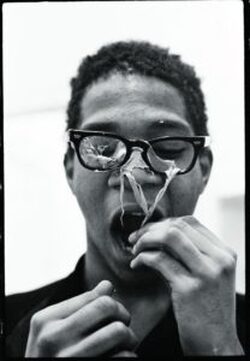 Jean-Michel Basquiat’s mother was originally from Puerto Rico and his father from Haiti. They lived in New York where their children were born and raised. Basquiat visited art exhibitions and museums from a young age with his mother who also encouraged his artistic talents. The first tragedy the family experienced was the death of Basquiat’s older brother shortly after he was born. When Basquiat was eight he was struck by a car. His injuries were extensive and his spleen was surgically removed. During his stay in the hospital, Basquiat was entertained by a medical textbook his mother brought him. In later years it became apparent that the sketches in the book made such an impact on him that it featured in much of his work. Sadly, the accident was not the only blow for Basquiat that year – his parents separated. His mother was then diagnosed as mentally unstable and the children had to live with their father. A few years later her mental state had declined so far that she was committed to a hospital and subsequently spent extended periods in mental institutions. Basquiat was 15 when he ran away from home to sleep in the streets. He was arrested and taken home but left yet again aged 17. This time he didn’t go back and instead left school and started living with a friend and his family. In later years Basquiat made a modest living by painting and selling postcards and also sold drugs. He spent nights hanging around in punk rock nightclubs hours. During this time he began painting the New York City walls, signing his work as SAMO. A Short Path to FameBasquiat’s art in the streets got noticed. Pop art icon Andy Warhol took an interest in him as did neo-expressionist artist Julian Schnabel and eminent street artist Keith Haring, who also became enchanted with the young artist’s mark all over the city. Basquiat’s work exploded onto the contemporary art scene in New York and was soon featured on some of the city’s top galleries’ walls. He became an instant star. Various high-end and underground art magazines featured Basquiat as a formidable and fresh new voice in the scene. Fame and fortune lead to the young artist dating Madonna and developing habits like driving past street merchants in his limousine and handing out US$100 bills to them. Unfortunately, not all of his habits had a positive outcome. The Final Devastating ChapterJust as fast as he shot to stardom, Jean-Michel Basquiat crashed. He was a victim of drug abuse and was eventually killed by it. When he was only 27 years old Basquiat died in his Manhattan studio of a drug overdose. The Art Lives onAfter his tragic death, Jean-Michel Basquiat and his contribution to the contemporary art scene was honored at the Whitney Museum of American Art and at the Brooklyn Museum. His short life has featured in biographies and documentaries and his artworks have reached record sales prices of as much as US$100 million.
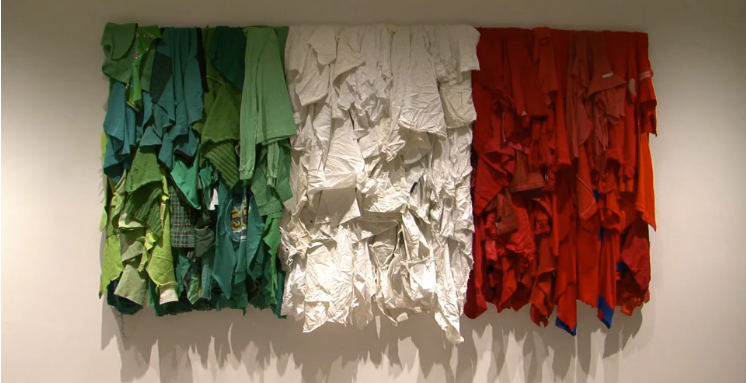 Arte Povera, also known as “anti-form” and “raw materialist art,” was an art movement that rejected fancy techniques and exclusive materials. The movement began in Italy in the 1960s when a collection of unconventional artists started making creative pieces out of otherwise useless elements like soil, rags, and bits of wood. These experimental artists created an innovative new genre by fusing conceptual art with minimalism, assemblage, and often with performance art as well in pioneering style. Turin-based art dealer Enzo Sperone decided to promote the movement and Germano Celant, an art critic, gave the movement its name. 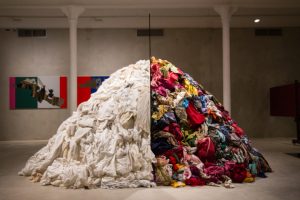 Exploring the Elements Behind Arte PoveraThe rules in art are fluid at best, especially when it comes to what forms an art movement. To explore the origin of Arte Povera, it is best to take a closer look at what influenced the start of the movement. The art world widely believes that the primary Arte Povera artists were influenced by the political and economic chaos that Italy was experiencing at the time. Some of the first contributors to the movement included the Dau al Set artistic collective led by Joan Brossa, a poet who tried to translate the conscious and unconscious into art. In addition, the movement was influenced by Piero Manzoni, who used irony to give interpretation to avant-garde art, and the Spatialism movement, spearheaded by Lucio Fontana’s amalgamation of space, color, sound, and motion. Similarities and Differences From Other Contemporary MovementsBecause of its disdain for convention and casual approach to art, Arte Povera has been compared to Neo-Dadaism and Nouveau Realisme, but the movement has remained unique since its artists would tend to infuse both deep emotion and a high level of intellect into their works. Renowned Arte Povera Artists Four of the movement’s most prominent artists are: • Jannis Kounellis, who highlighted social and spiritual deficiencies by creating peculiar constructions. • Luciano Fabro, an artist known for using organic elements such as vegetables in mixed media projects. • Mario Merz, who worked with matter, energy, and light to create organic artworks. • Gelberto Zorio, an innovative artist who used items like light tubes, materials like pitch, and natural processes like evaporation and oxidation to create unusual works. How the Movement Impacted Art HistoryAlthough a large range of materials used by Arte Povera artists may have been acquired for free, the “poor” nature of the movement has been overestimated throughout history. Some of the most significant Arte Povera works used costly materials and were exhibited in exclusive and sophisticated locations. Besides achieving a decent amount of fame in avant-garde circles, many of the artists did not ever become recognized globally for their work. Nevertheless, the movement still managed to become quite prominent in the postmodern art realm. A wide range of Arte Povera works are still on display at major international art museums, including at the Castello di Rivoli Museum of Contemporary Art in Italy, the Museum of Modern Art in New York, the Courtauld Institute in London, and the Kunstmuseum in Liechtenstein.
|
 RSS Feed
